Field Notes · Vol. 09 · Land Use & Stewardship · 5–6 min read · September 2026
Before You Lease Family Land: What Should the Agreement Protect?
Letter 09 · By ACRES KEPT
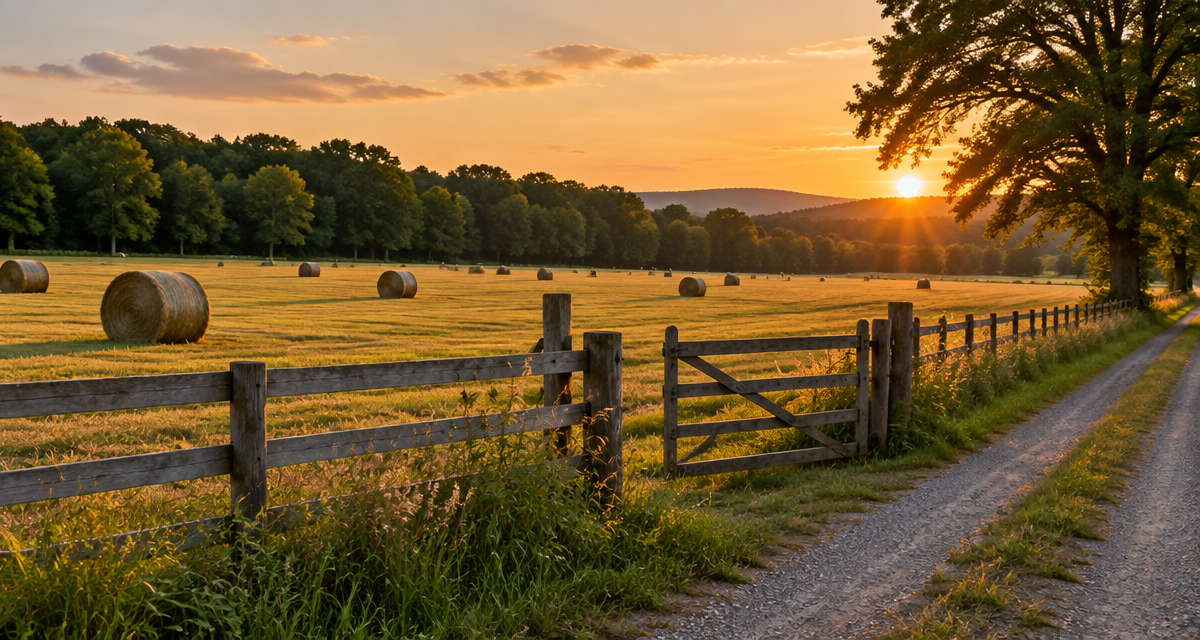
Leasing family land can sound simple.
Someone wants to farm it, graze livestock, cut hay, hunt, manage timber, or use part of the property for another purpose.
The family agrees on a price.
Money changes hands.
And the land stays in the family.
In many cases, leasing can be a practical way for land to produce income without being sold.
But a lease does something else that families should take seriously:
It gives someone outside the ownership group the right to use the land.
That makes the agreement about more than rent.
It is also about stewardship, responsibility, expectations, and what happens to the property while someone else is using it.
The question is not simply:
“How much should we charge?”
A better question is:
“What does this agreement need to protect?”
Leasing is a significant part of American agriculture
Renting agricultural land is not unusual.
USDA’s Tenure, Ownership, and Transition of Agricultural Land survey shows that hundreds of millions of acres of U.S. farmland are rented or leased, and a substantial portion of those acres are owned by landlords who are not themselves farming the property.
That matters because it demonstrates something important:
Owning agricultural land and operating agricultural land are often two different roles.
A family can retain ownership while someone else puts the land to productive use.
But the quality of that relationship matters.
1. Protect the intended use of the land
A lease should begin with clarity about what the tenant is actually being allowed to do.
“Use the property” is not enough.
Is the land being leased for row crops?
Cattle?
Hay production?
Hunting?
Timber-related activity?
A specialty crop?
Some combination?
The intended use affects almost everything else in the relationship.
It can influence soil condition, roads, fences, water systems, vegetation, wildlife habitat, neighboring properties, and even future options for the family.
Extension guidance on agricultural leasing consistently identifies permitted use and management expectations as core issues that should be clearly addressed.
That is a useful principle even outside traditional crop farming.
Families should understand what activity they are authorizing before the activity begins.
2. Protect the condition of the property
A rent check can be temporary.
Damage to land can last much longer.
That is why a lease should address responsibilities for maintaining the property.
Who maintains fences?
Who repairs a damaged gate?
What happens to farm roads?
Who manages weeds?
Who is responsible for structures being used by the tenant?
Can trees be removed?
Can drainage be altered?
Can chemicals be applied?
What happens if the tenant installs something on the property?
Leasing guidance from agricultural Extension programs commonly identifies repairs, improvements, maintenance, and responsibilities of both landlord and tenant as matters that should be addressed in the agreement.
This is particularly important for family land.
A family may be thinking about the property in generations.
A tenant may understandably be focused on the years covered by the lease.
Those time horizons are not always the same.
The agreement should help bring them into alignment.
3. Protect the land’s conservation value
A family does not have to operate the farm itself to care about the soil.
American Farmland Trust has documented the importance of communication between non-operating landowners and farmers when it comes to conservation practices on rented land.
Short-term lease arrangements can sometimes make it harder for tenants to justify investments in soil health, fencing, water systems, or other improvements if they are uncertain how long they will remain on the property.
That creates an important question for both sides.
If a tenant is expected to improve the property, does the lease provide enough stability to make that reasonable?
If the family wants certain conservation practices maintained, are those expectations actually discussed?
Long-term stewardship does not happen automatically because land remains in agricultural use.
The landowner and the operator need a shared understanding of what stewardship means for that property.
4. Protect both sides with clear financial terms
Rent matters.
But the amount is only one financial term.
The agreement should also make clear when rent is due, how it is paid, what acreage or facilities are included, and who pays particular expenses associated with the property or its use.
USDA Farm Service Agency guidance recognizes that agricultural rental arrangements can take different forms, including fixed cash rent and other compensation structures.
Different leasing structures can allocate risk differently.
A fixed cash lease may provide the landowner with predictable rent.
Other arrangements may respond differently to production, prices, or operating conditions.
There is no universal structure that fits every property.
The important point is that families understand the economic arrangement before agreeing to it.
Rental income should not be evaluated without also considering expenses, property taxes, maintenance, insurance, and the responsibilities the family continues to carry.
Income is not the same thing as profit.
5. Protect the relationship by putting expectations in writing
Some family land arrangements begin informally.
Someone knows someone.
A neighbor has used the field for years.
A farmer has always cut the hay.
A relative allows someone to hunt.
Everyone believes they understand the arrangement.
Until they do not.
University Extension guidance consistently recommends putting lease terms in writing.
A written agreement can identify the parties, property, lease term, rent, responsibilities, permitted uses, restrictions, and termination provisions.
That does not mean every lease must be complicated.
It means important expectations should not depend entirely on memory.
Written agreements also help when circumstances change.
A family member dies.
Ownership transfers.
The tenant changes operations.
The family decides it needs the property for another purpose.
A future generation should not have to reconstruct an important land agreement from conversations it was never part of.
The lowest rent may not be the best arrangement
Landowners often focus on whether the rent is high enough.
Prospective tenants often focus on whether the rent is affordable.
Both questions matter.
But the strongest lease may be the one that creates a workable relationship between economic value and stewardship.
A tenant who communicates well, maintains the property, respects boundaries, follows agreed conservation practices, and treats the land as a long-term resource may provide value that does not appear in the rent figure alone.
Similarly, a landowner who offers clear expectations, reasonable terms, and enough stability for an operator to make responsible improvements may become a better partner to the tenant.
American Farmland Trust emphasizes communication between landowners and farmers as an important part of successful leasing relationships.
That relationship is part of the stewardship equation.
The family needs authority to lease the land
There is another issue that can become particularly important with inherited or jointly owned property:
Who actually has the authority to sign the lease?
If several relatives own interests in the land, one family member should not simply assume that he or she can make a binding long-term decision for everyone else.
That question may become even more complicated when title is unclear, an estate was never completed, or the property is heirs’ property.
This connects back to an earlier ACRES KEPT Field Note: Before the Family Decides.
Before making consequential decisions about family land, families need to understand who actually owns it and who has decision-making authority.
A good opportunity does not eliminate the need for ownership readiness.
The ACRES KEPT perspective
Leasing can be one of the most useful tools available to a family that wants to keep land while putting it to productive use.
It may generate income.
It may keep agricultural acreage active.
It may connect land to a farmer or steward who needs access but is not ready or able to purchase property.
It can create opportunity on both sides.
But a lease should do more than establish a rent payment.
It should help protect the land.
It should define responsibility.
It should establish expectations.
And it should give both the landowner and the person using the property enough clarity to understand what responsible stewardship requires.
Before asking:
“How much can we lease this land for?”
Families may want to ask something first:
“What do we need this agreement to protect?”
Because keeping ownership is important.
But so is protecting what happens to the land while you own it.
Sources Referenced
- USDA National Agricultural Statistics Service — Tenure, Ownership, and Transition of Agricultural Land
- USDA Farm Service Agency — agricultural rental and cash-rent guidance
- American Farmland Trust — farmland leasing, non-operating landowners, conservation, and landowner-tenant communication
- Iowa State University Extension and Outreach — farmland lease agreements and lease provisions
- University of Minnesota Extension — farmland lease negotiation and written agreements
Field Notes provides general educational information and does not constitute legal, tax, financial, investment, agricultural, forestry, conservation, environmental, or real estate advice. Lease law and requirements vary by state and individual circumstances. Landowners and tenants should consult qualified legal, tax, agricultural, insurance, and other professionals before entering into a land-use agreement.